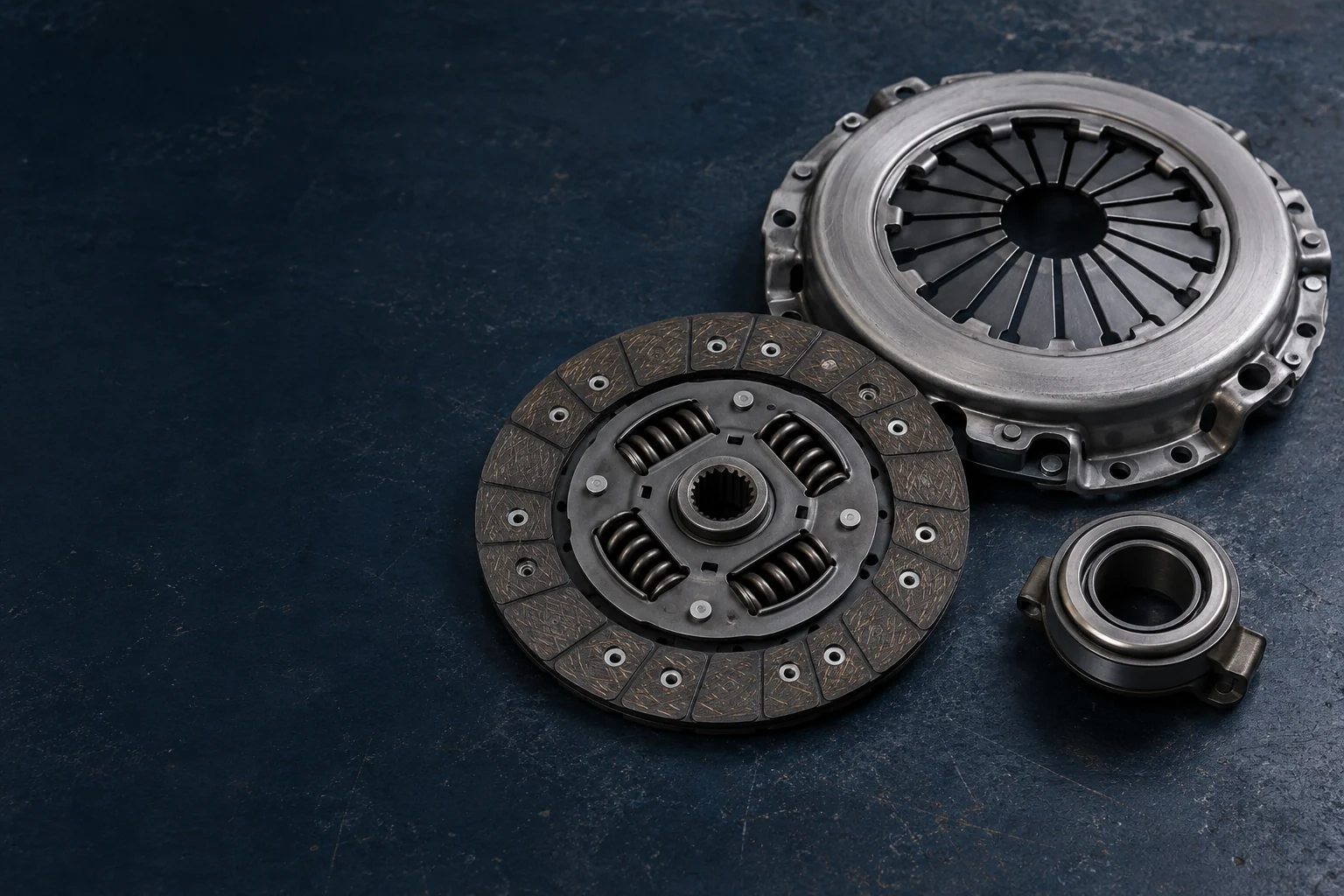
Identify a forklift clutch kit from the documented transmission arrangement, assembly reference and exact required contents. A mechanical clutch set and internal transmission friction components are separate enquiries. Ask for a component-by-component offer and applicable interface records. A truck brand, disc diameter or reported slipping concern does not establish the correct kit.
Identify what the equipment parts record calls the clutch or clutch assembly before ordering a kit. A manual mechanical clutch set is a different enquiry from a friction component inside another transmission arrangement. The earlier statement that torque-converter trucks contain no friction clutch was too broad and is not retained. This guide does not infer the internal architecture of a transmission from its marketing category. Preserve the full assembly designation and ask the original documentation route which component family the requirement belongs to.
More guidance for this step
Keep every kit component identifiable
A supplier may describe a set using a friction disc, pressure-plate or cover assembly, release bearing and other separately identified items. Treat that list as an offer to verify, not a universal kit definition. Ask for each included reference and quantity, including whether a pilot bearing or alignment accessory is actually supplied. A photograph of several parts is not the written scope. If the original request needs a complete set, make omissions and separately quoted components visible before comparing the commercial offers.
Make missing information visible
Begin with the truck manufacturer, full model, serial number and the name or position used in its parts documentation. Retain the assembly reference when the component belongs to a documented engine build or fuel/cooling/electrical assembly. An incomplete reference should remain incomplete in the enquiry: do not silently add a familiar suffix or convert an unclear photograph into a catalogue designation. Existing records and safely available label photographs can help a supplier ask the right follow-up question. This page does not require dismantling or operating equipment to obtain information.
Compare references before interface dimensions
Retain the engine and transmission identification, component suffixes and applicable drawing. Where the documents specify disc size, spline information, mounting arrangement or bearing interface, ask the offer to return those same fields with their source. This guide supplies no dimensional fit table and no universal sprung-versus-solid interchangeability rule. Do not remove an assembly merely to collect enquiry measurements. If the component number is missing, state that fact and request the correct catalogue position rather than promising a cross-reference from an estimated diameter.
More guidance for this step
Treat supplier access as a document route with limits
HELI presents original truck categories alongside parts, components and service routes. For an identified HELI truck, its profile can start an enquiry for the original assembly record. It does not establish a clutch kit or a universal replacement service. A directly listed clutch-kit offer remains unconfirmed; ask which supplier can identify and quote the exact documented set. Keep a reported slipping, noise or shifting concern separate from the kit request; this page gives no disassembly or return-to-service instructions.
Keep the quotation technically comparable
Ask every candidate to quote the same written requirement. Separate the original equipment reference, the supplier catalogue reference and the reference actually offered. Ask for the offered manufacturer, condition, supplied quantity, included components and documents. A substitution proposal should list unresolved differences rather than hide them behind the word compatible. Compare the commercial offers only after those differences are visible. A lower price or shorter delivery time does not establish technical acceptance, and a directory entry is not an inventory reservation.
Separate source evidence from supplier promises
The source notes below document the category information actually reviewed. A company catalogue can establish that a business presents a relevant product family, but that does not prove that a pictured item is currently available or that a proposed component fits another manufacturer’s machine. Request written confirmation for the exact offered item. Keep any claimed original status, certification or authorised relationship distinct from the item description and ask for its basis. This guide adopts no marketing durability figures, market-share claims or unnamed customer approvals.
Close the enquiry with explicit responsibilities
Record who will resolve the remaining technical questions and which documents will support that decision. State quantity, destination, required delivery information and the scope of any separately quoted service. Keep a professional condition assessment distinct from the purchase request. This is an identification and procurement guide, not a removal, adjustment, repair or return-to-service procedure. If the supporting reference cannot be obtained, preserve the question as unresolved instead of buying on a symptom, a generic category picture or an assumed cross-reference.
Supplier profiles for this requirement
These company routes are tied to readable manufacturer or company-controlled material reviewed on 3 October 2026. Use the stated scope to begin a shortlist. A profile does not establish current stock, certification, authorisation or a match for your truck.
The manufacturer site separates internal-combustion trucks, parts, components and service routes. For a documented HELI truck, request its original transmission and component records. This is a related identification route, not confirmation of a clutch kit, all-brand supply, inventory or exact fit.
For additional candidates, use the parts supplier directory. Ask each supplier to return the exact proposed item, condition, included documents, unresolved differences, quantity, destination and current delivery terms. Keep technical acceptance separate from commercial availability.
Purchasing questions
Does every clutch kit contain the same parts?
No. Ask for each included component, full reference and quantity. A kit title does not confirm a release bearing, pilot bearing or any other item.
Are torque-converter transmissions always free of friction components?
Do not use that blanket assumption. Identify the actual transmission and the component named in its parts documentation; keep internal transmission enquiries separate from a mechanical clutch set.
Can disc diameter alone establish fit?
No. Preserve the complete assembly reference and documented interfaces. Request a written proposal with the relevant engine and transmission record and any unresolved differences.
Is a direct clutch supplier confirmed here?
No current direct-kit offer is confirmed. HELI is an original-truck assembly-document route. Supplier availability and the exact proposed kit still require a specific written enquiry.
Primary-source notes · reviewed 3 October 2026
The references below support the stated category and identification examples. Manufacturer marketing statements are not treated as independent tests. No model-specific operating values, repair procedures or performance promises are inferred for another machine.
HELI company body: separate truck, parts, component and service navigation; conditional original-assembly records only: https://www.helichina.com/
Prepare a parts matching request
Send the equipment identity, complete component reference, existing drawings or label photos, requested scope, quantity and destination. Mark missing information unknown and ask suppliers to answer the same written requirement.