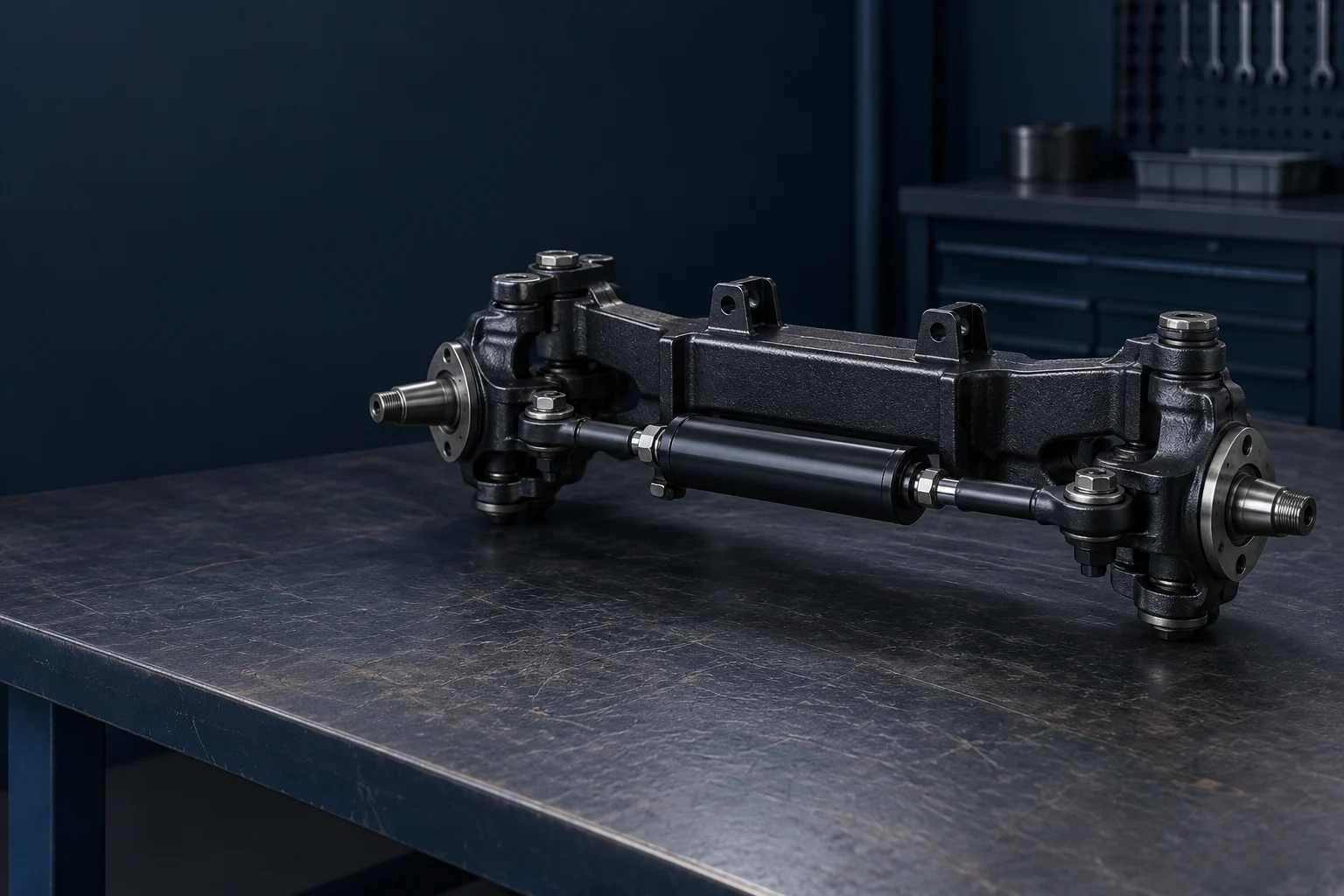
Prepare a steering-parts request from the exact truck and documented steering arrangement. Separate a hydraulic steering unit, cylinder, axle assembly and mechanical linkage from an electrical steering controller. This system guide routes each requirement to a narrower category; it does not establish a fault, universal architecture or confirmed replacement.
Record the truck manufacturer, full model, serial number and the assembly name used in its parts documentation. Keep counterbalance, reach truck and powered pallet truck descriptions separate. A system page cannot tell you that all those machines share a rear axle, a hydraulic metering unit or the same linkage. Use existing records to establish which category is actually present. If the drawing or reference is missing, state that uncertainty rather than translating a familiar part name into an assumed architecture.
More guidance for this step
Route the request to the correct component
A complete steering axle request differs from a cylinder-only request, a metering-unit request or a linkage component. Ask which items are included in the proposed assembly and which must be ordered separately. An electrical steering controller belongs to a different identification process from a hydraulic steering unit, even when both appear in search results for steering parts. Use the category links above to continue the specific enquiry instead of sending every supplier the same ambiguous steering-parts description.
Retain references and documented interfaces
Copy complete component references, suffixes and assembly positions exactly. Keep the original truck reference distinct from a seller catalogue number and a proposed replacement reference. Request existing drawings for mounting, ports, linkage or connector interfaces as applicable to the component. Do not replace an unknown interface with a guess from a photograph. This is a document collection step: it does not instruct anyone to dismantle steering components, measure a pressurised system or energise equipment to establish compatibility.
More guidance for this step
Treat manufacturer family examples as boundaries
Danfoss names multiple circuit configurations in its OSPB steering-unit family. That provides a useful reason to preserve the exact unit reference; it does not approve any OSPB variant for a particular forklift. A similar-looking housing or the same general displacement description cannot settle all application differences. Keep numerical operating limits and service settings out of this general request. Ask the supplier to identify the current technical document and the equipment-specific basis for its proposal.
Compare the response by assembly scope
Ask for a written proposal that identifies the offered component, condition, manufacturer, source reference, included hardware and drawings. Keep any claimed original or compatible status separate from the part description and request its basis. A directory profile establishes a discovery route, not an inventory reservation or interchange confirmation. For an axle quotation, list the included knuckles, cylinder, linkage or hubs only when the supplier actually includes them. Compare incomplete proposals after resolving those exclusions.
Keep symptoms separate from procurement approval
A symptom report may help a qualified service team understand a request, but it does not identify the failed part or authorise a purchase. Do not turn steering effort, looseness or a leak into an automatic cylinder or valve diagnosis. Record any existing professional assessment separately from the quotation. This page provides no adjustment, pressure-testing or return-to-service procedure. Finish with a documented component requirement and unresolved questions so technical acceptance remains distinct from price, delivery and availability.
Supplier profiles for this requirement
These company routes are tied to readable manufacturer or company-controlled material reviewed on 3 October 2026. Use the stated scope to begin a shortlist. A profile does not establish current stock, certification, authorisation or a match for your truck.
The manufacturer component site publishes axle categories and technical support. For a HELI truck, use this as an original equipment-document enquiry route. It does not establish a stocked steering assembly, all-brand replacement service or an interchangeable component. Ask the responsible company for the exact assembly and documents.
For additional candidates, use the parts supplier directory. Ask each supplier to return the exact proposed item, condition, included documents, unresolved differences, quantity, destination and current delivery terms. Keep technical acceptance separate from commercial availability.
Purchasing questions
Does every forklift use the same steering system?
No. Establish the arrangement from the exact equipment documentation. This guide separates category enquiries and does not assume a rear steering axle or a hydraulic metering unit for every truck.
Can a photo establish an interchangeable steering part?
No. A photo helps identify a candidate. Obtain complete references, documented interfaces and an equipment-specific proposal before treating it as a replacement.
Does the supplier profile confirm steering stock?
No. The HELI route is limited to relevant manufacturer document enquiries. Current component scope and availability require a written response.
Can I order the whole axle to avoid identifying its components?
A complete assembly still requires its exact reference, truck identity and included scope. A generic axle description does not resolve those requirements.
Primary-source notes · reviewed 3 October 2026
The references below support the stated category and identification examples. Manufacturer marketing statements are not treated as independent tests. No model-specific operating values, repair procedures or performance promises are inferred for another machine.
HELI component categories and technical-support route: https://lbj.helichina.com/
OSPB family configuration distinctions only: https://powersource.danfoss.com/products/steering/hydraulic-steering/hydraulic-steering-units/ospb-hydraulic-steering-units
Prepare a parts matching request
Send the equipment identity, complete component reference, existing drawings or label photos, requested scope, quantity and destination. Mark missing information unknown and ask suppliers to answer the same written requirement.