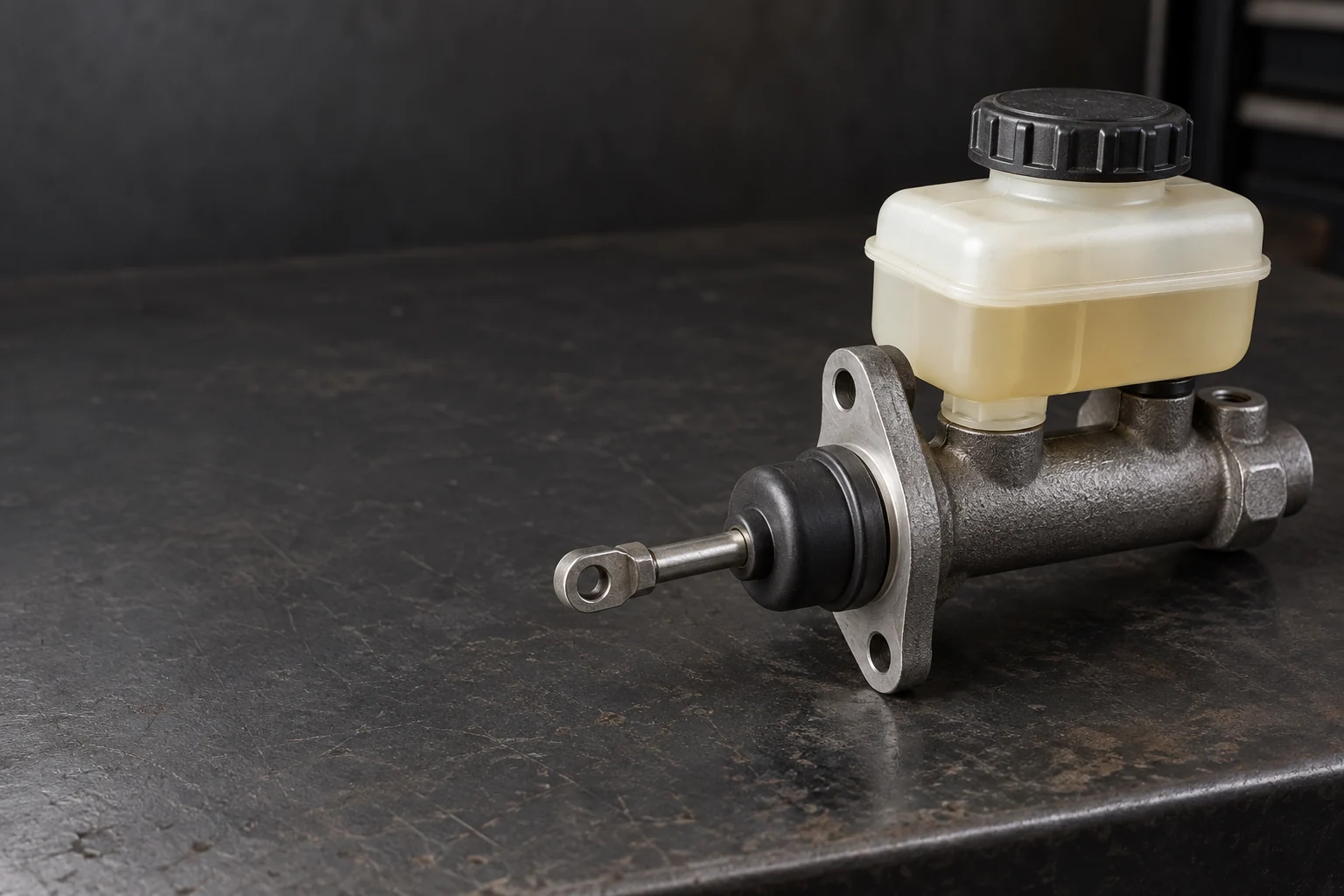
Identify a forklift brake master cylinder from the documented brake system, complete component reference and truck identity. Distinguish it from a wheel cylinder, clutch master cylinder or booster. A pedal symptom, matching bore or similar photograph does not establish the failed component or approve a replacement. Request a documented, equipment-specific proposal before comparing offers.
Begin with the truck manufacturer, complete model and serial number, followed by the existing brake assembly and component references. A category page cannot establish that every forklift has the same hydraulic actuation arrangement. Keep a brake master cylinder separate from an actuator at the wheel, a booster and any clutch-control cylinder. Record the component name used in the equipment parts documentation rather than choosing a part from a generic photograph. If that documentation is missing, identify the requirement as unresolved and request the correct parts record for the truck.
More guidance for this step
Preserve the complete cylinder identity
Keep every visible identifier, including manufacturer, full number, suffix and revision, with an existing label photograph or drawing. Retain the documented mounting pattern, reservoir or feed arrangement, pushrod interface and port information as separate fields. Record a bore dimension only when it is already available from a reliable record; this enquiry does not require opening a brake assembly or making internal measurements. A dimension is an identification input. The supplier must explain the documented application of the proposed unit rather than treating a matching bore as complete approval.
Distinguish catalogue identifiers from truck approval
One readable Taizhou Shuangyi catalogue example identifies its internal reference SY-BMC-3846 alongside OE-number fields 10536340-00 and 12903813-00 and a named BYD application. Those are separate catalogue fields, not three automatically interchangeable numbers. This example illustrates why the supplier reference, stated comparison numbers and equipment configuration should all remain in the enquiry. ForkliftIQ has not independently approved that listing for a particular serial number, checked its stock or validated its manufacturing claims. Ask for the current model-specific basis and resolve any differences in writing.
More guidance for this step
Define complete-unit and kit scope separately
A complete master-cylinder enquiry and a repair-kit enquiry are different purchasing requests. Ask whether an offer includes the reservoir, cap, pushrod, mounting hardware or other named accessories, and keep an explicit exclusion list. For a kit, the parent cylinder reference and the supplied contents must be identified. This page does not decide whether a cylinder can be rebuilt from bore appearance, a seal photograph or price. Component condition and repair decisions belong to qualified assessment using the applicable equipment documentation; an inexpensive kit is not evidence that a repair is appropriate.
Treat braking symptoms as unresolved evidence
A soft pedal, fluid loss or reduced braking does not identify a master-cylinder defect on this purchasing page. Keep the reported symptom separate from the component being requested and avoid turning an observed fluid level into an assumed internal failure mechanism. Obtain a competent equipment-specific assessment before selecting repair parts. No pedal test, disassembly, fluid substitution, bleeding, pressure value or return-to-service procedure is provided here. The request form helps organise the proposed replacement and documents; it is not a brake inspection or permission to operate the truck.
Compare a specific proposal and retain its boundary
Ask the quoting entity to state the offered manufacturer, exact reference, condition, quantity, included accessories and supporting document. Where an alternative is proposed, request the differences and the basis for its equipment application. Confirm commercial availability, lead time and warranty terms separately from technical acceptance. The HELI profile below is a document-identification route for HELI equipment, not a seller confirmation for the Shuangyi example or another brand. For other trucks, use the parts directory and seek a supplier whose current written proposal addresses the exact component requirement.
Supplier profiles for this requirement
These company routes are tied to readable manufacturer or company-controlled material reviewed on 3 October 2026. Use the stated scope to begin a shortlist. A profile does not establish current stock, certification, authorisation or a match for your truck.
The manufacturer-controlled component site publishes component categories and technical support. For a HELI truck, this is an equipment and component-document identification route. It is not a confirmed master-cylinder or hydrostatic steering-unit offer, a Danfoss dealer listing, or a route that covers another truck brand. Obtain the exact responsible entity and component proposal separately.
For additional candidates, use the parts supplier directory. Ask each supplier to return the exact proposed item, condition, included documents, unresolved differences, quantity, destination and current delivery terms. Keep technical acceptance separate from commercial availability.
Purchasing questions
Does the same bore mean two master cylinders are interchangeable?
No. Bore information alone does not establish the complete hydraulic, mounting, reservoir or linkage configuration. Request documented confirmation for the exact equipment and offered reference.
Can this page identify a failed master cylinder from a soft pedal?
No. State the symptom as unresolved and obtain an equipment-specific qualified assessment before choosing a replacement. This page provides purchasing information, not diagnosis.
Does a repair kit replace a complete cylinder automatically?
No. A kit has its own contents and parent-cylinder identity. Its availability does not establish that rebuilding the existing component is appropriate.
Is the linked HELI route a confirmed source for every example?
No. It is an original truck and component-document enquiry route for HELI equipment. It does not confirm another brand, the Shuangyi example, inventory or an exact replacement.
Primary-source notes · reviewed 3 October 2026
The references below support the stated category and identification examples. Manufacturer marketing statements are not treated as independent tests. No model-specific operating values, repair procedures or performance promises are inferred for another machine.
Company catalogue example: internal reference and OE-number fields only; no fit or performance approval: https://www.brake-cylinder.com/brake-master-cylinders/brake-master-cylinder-for-byd-forklift-cpd15.html
Manufacturer component categories and technical-support route; not a confirmed master-cylinder listing: https://lbj.helichina.com/
Prepare a parts matching request
Send the equipment identity, complete component reference, existing drawings or label photos, requested scope, quantity and destination. Mark missing information unknown and ask suppliers to answer the same written requirement.