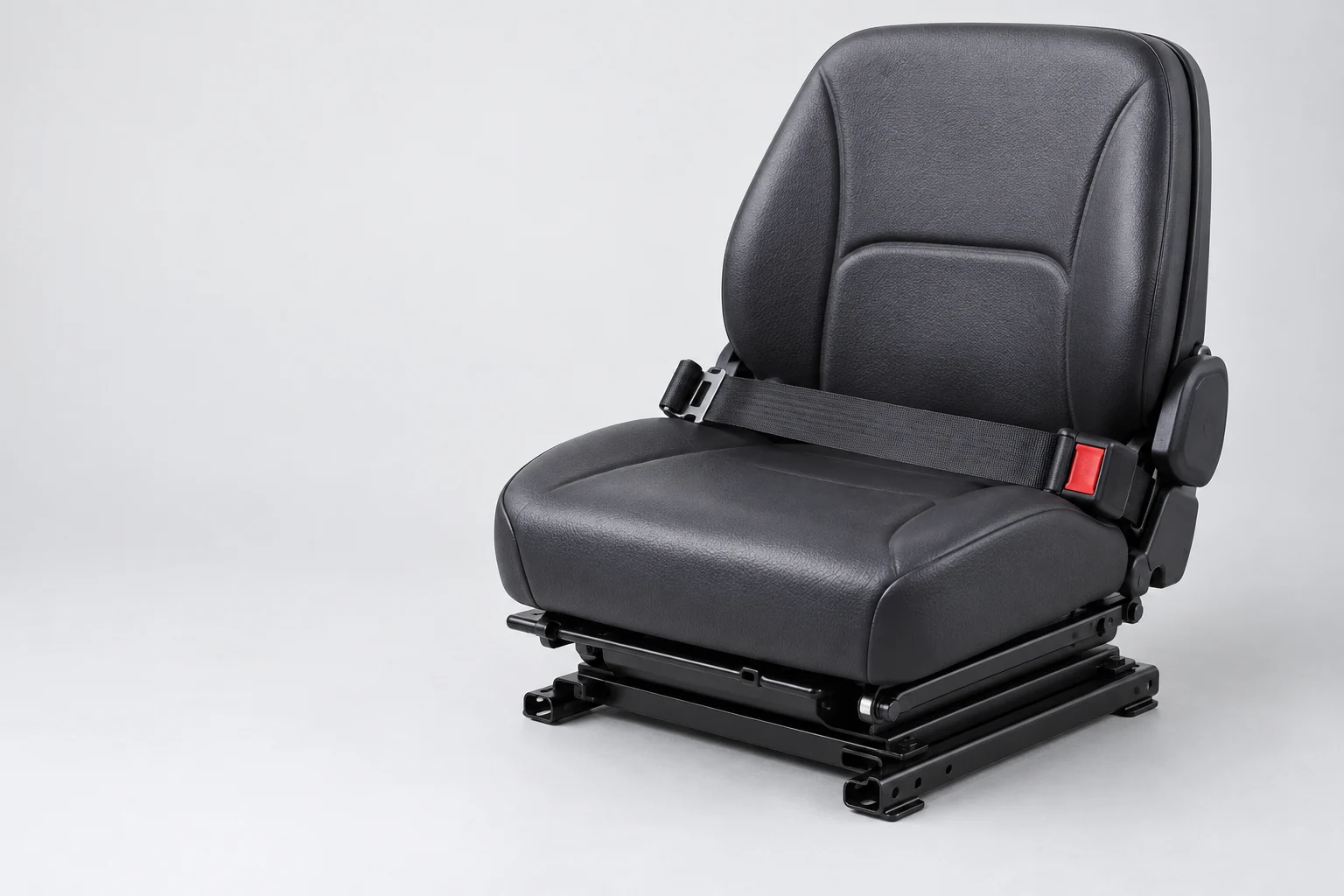
A driver seat, backrest, slide rail, belt and seat switch are different purchasing scopes. Start by describing which assembly is required and which existing components the proposal expects to retain. Include the truck model and serial number, seat label and any equipment documentation. Do not treat a parts-page photograph as proof of the supplied scope. Ask the supplier to itemise what comes in the quotation, including mounting pieces and any electrical component, and to state what remains outside the offer.
More guidance for this step
Record the mounting and available envelope
Prepare the documented mounting arrangement, fixing pattern, seat position and available clearance. Adjustment travel, suspension layout, control position and access can affect the proposed assembly. Request a dimensioned drawing rather than copying measurements from an illustrative image. A rail kit offered for a named seat should not be assumed suitable for another base. Keep unknown dimensions visible in the request. The purpose of this comparison is to expose differences for technical review, not to declare a universal replacement from approximate size.
Keep seat options tied to a named family
GRAMMER’s material-handling MSG65 family page describes a low-profile mechanical suspension seat and selectable seating features. Such information is useful as an example of why seat configuration matters. It is not evidence that this family fits every forklift, or that a supplier is an authorised GRAMMER outlet. If considering a named model, request its exact configuration, current drawing and available options. Compare the proposal with the equipment requirements rather than transferring manufacturer marketing statements into a general comfort or safety guarantee.
More guidance for this step
Treat restraint and presence interfaces separately
A belt or presence switch should not be selected simply because it is attached to a similar-looking seat. Retain the original reference and equipment-specific requirements for each interface. Ask whether the proposed assembly includes the relevant component and documentation, and whether any differences remain unresolved. This guide does not explain bypasses, switch adjustments or machine release procedures. Replacing a seat cannot by itself establish that operator-presence functions or restraints satisfy the truck’s requirements. Those questions need the appropriate equipment documents and technical acceptance.
Use the supplier route within its observed scope
Decha’s company catalogue contains named driver seats, backrest assemblies, rails, belts and seat-switch entries associated with particular brands or references. This supports a seating-component enquiry route, not a claim of confirmed stock or approved substitutions. Quote the exact observed reference and ask the company to identify the item it proposes. A backrest listing is not a complete-seat offer. Request clear identification of the manufacturer, condition, included components and evidence for the stated application before comparing price or delivery.
More guidance for this step
Create a seating acceptance record
Keep the original assembly identification, supplier proposal, drawing, outstanding differences and commercial terms in one record. Ask for packaging dimensions, included documents, quantity and destination, while separating those details from the fit decision. Record whether the proposal covers a complete seat or only a service component. If restraint or electrical documentation is missing, keep the enquiry open. The category illustration shows a generic assembly form only; it does not prove a manufacturer design, suspension performance, compliance, or an actual replacement offered for sale.
Supplier profiles for this requirement
These company routes are tied to readable manufacturer or company-controlled material reviewed on 3 October 2026. Use the stated scope to begin a shortlist. A profile does not establish current stock, certification, authorisation or a match for your truck.
Company catalogue examples include named encoder-related assemblies, driver seats, seat rails, belts and seat switches. Ask about the specific reference; a catalogue lead does not prove current stock or approved interchangeability.
For additional candidates, use the parts supplier directory. Ask each supplier to return the exact proposed item, condition, included documents, unresolved differences, quantity, destination and current delivery terms. Keep technical acceptance separate from commercial availability.
Compare the complete seat and its accessories
KL Seating provides a seating-focused enquiry route alongside the existing component catalogue. Its reviewed YY01 entry distinguishes the seat from optional accessories. Ask for the complete proposed configuration and an itemised supply list, including rails, belt and any detection component. A family name or a brand in a catalogue title does not establish a replacement match.
No. Match the documented mounting, assembly scope, equipment requirements and relevant interfaces for the particular truck.
Does a seat include the belt and switch?
Only if the written proposal says so. Request an itemised configuration and the required equipment-specific documentation.
Can a replacement seat prove operator-presence safety?
No. Seat procurement and whole-machine functional acceptance are separate decisions.
Why keep a backrest or rail reference?
It helps distinguish an individual service component from a complete seat and prevents an ambiguous quotation.
Primary-source notes · reviewed 3 October 2026
The references below support the stated category and identification examples. Manufacturer marketing statements are not treated as independent tests. No model-specific operating values, repair procedures or performance promises are inferred for another machine.
GRAMMER named family and configuration examples: https://usa.grammer.com/seating-solutions/material-handling-seating/msg65-series.html
Send the equipment identity, complete component reference, existing drawings or label photos, requested scope, quantity and destination. Mark missing information unknown and ask suppliers to answer the same written requirement.