Repair & Troubleshooting
Forklift Won't Charge After Sitting
A forklift battery that won't charge after sitting is usually over-discharged below the charger's wake-up threshold, has a sulfated or imbalanced pack, a tripped BMS, or a charger fault. Test before replacing the pack.
— Reviewed by the ForkliftIQ technical team
When a forklift sits for weeks the pack self-discharges. If it drops too low the charger may refuse to start, a lithium BMS may enter protection, or lead-acid plates sulfate. The cause is usually recoverable — diagnose the pack and charger before condemning either.
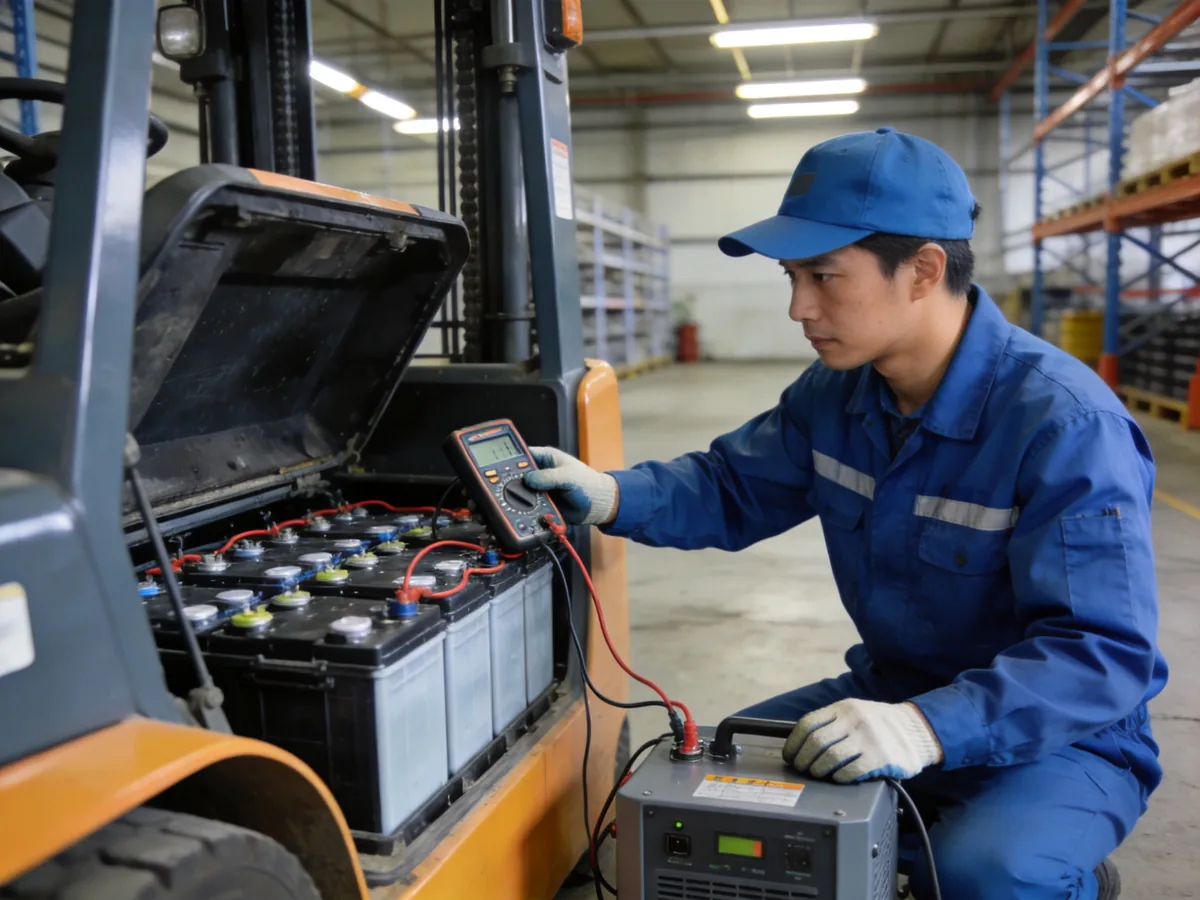
Most likely causes
Figure summary: Follow the diagnostic steps in order, working from the cheapest, most likely cause first and confirming with a test before replacing parts.
Over-discharged below charger threshold — If the pack sits and drops below the charger's minimum start voltage, the charger will not begin a cycle.
Lithium BMS in protection — A lithium pack's BMS can latch into low-voltage or sleep protection after deep discharge and refuse to charge until it is reset or woken.
Sulfated or imbalanced lead-acid cells — Standing partly charged sulfates lead-acid plates and imbalances cells, which blocks a normal charge.
Charger or connection fault — A faulty charger, a blown charger fuse, or a corroded charge connector stops charging regardless of the pack.
How to diagnose it
1
Measure the full pack voltage and compare it to the charger's minimum start voltage.
2
For lithium, check the BMS status and fault, and whether it needs a wake or reset per the manufacturer.
3
For lead-acid, check each cell's voltage and electrolyte and look for one lagging or dry cell.
4
Verify the charger powers up, its fuse is good, and the charge connector is clean and fully seated.
5
Try the correct manufacturer charge or recovery profile; some chargers have a low-voltage recovery mode.
6
If a cell or module is dead, or the charger is faulty, replace that component rather than the whole pack blindly.
⚠ Safety: Charging gives off hydrogen on lead-acid packs and lithium packs can fault — charge in a ventilated area, and never jump or force-charge a damaged or swollen battery.
Parts that commonly fix this
FAQ
Why won't my forklift charge after sitting?
Usually the pack over-discharged below the charger's start threshold, a lithium BMS latched into protection, sulfated lead-acid cells, or a charger or connection fault. Measure pack voltage first.
How do I wake a lithium forklift battery that won't charge?
Follow the manufacturer's BMS reset or wake procedure; a deeply discharged lithium pack often needs a specific recovery charger or a BMS reset rather than a normal charge.
Can a forklift battery be saved after deep discharge?
Often yes if caught early — lead-acid may recover with a recovery charge and lithium with a BMS reset; left too long, sulfation or cell damage can be permanent.
How do I store a forklift battery so it still charges?
Store it charged, top it up periodically, and keep the charger connected or recharge monthly so it never drops below the charger's wake-up voltage.
Need the parts — fast, factory-direct?
Tell us your forklift make, model and the part you need.
Get a parts quote →Diagnostic guidance is general and indicative — always follow your truck's service manual and a qualified technician for your specific model.