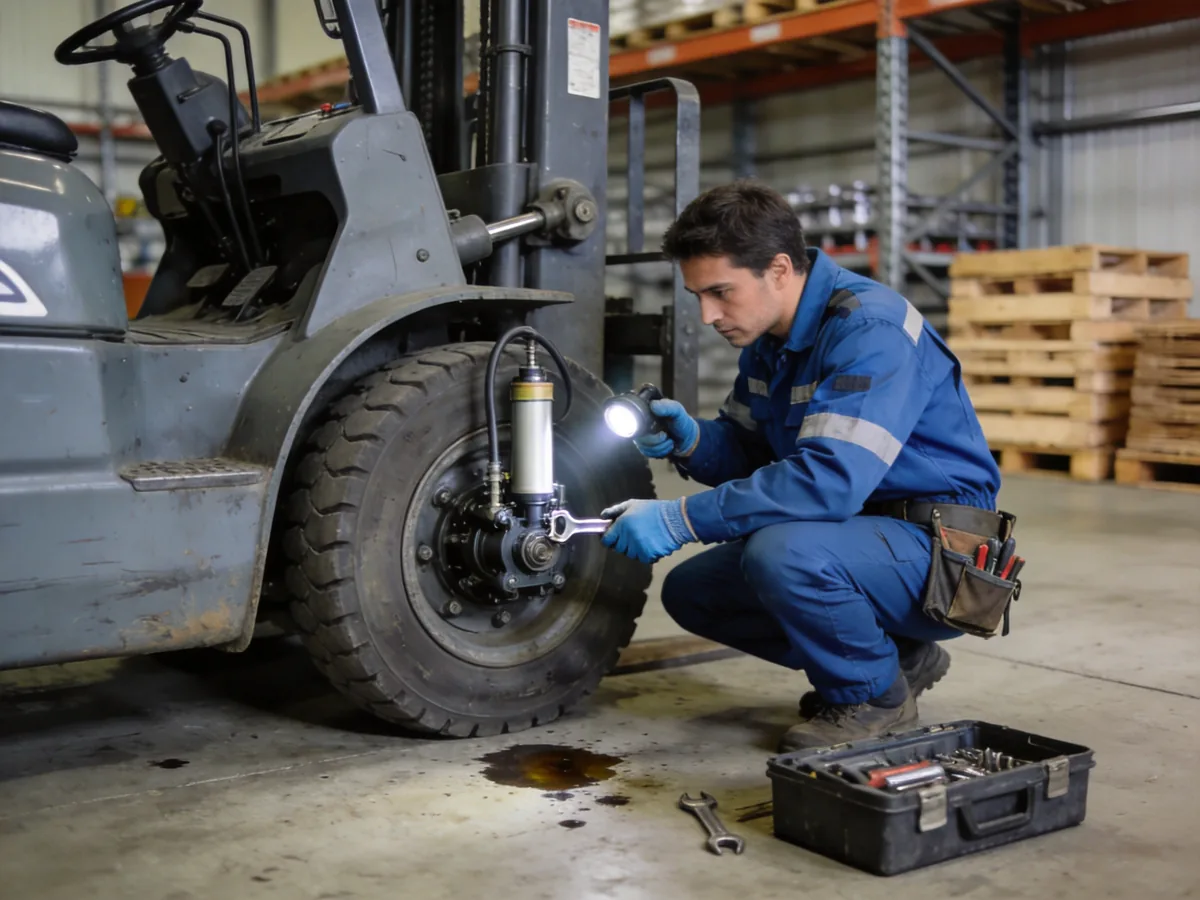
Heavy or stiff forklift steering usually points to low hydraulic oil, a weak steering pump, a worn steering unit (orbitrol), or a leaking steer cylinder. Diagnose before forcing it.
— Reviewed by the ForkliftIQ technical team
Power steering on a forklift is hydraulic, so steering that is hard to turn is almost always a hydraulic-assist problem: low or wrong oil, a weak steering pump, a worn orbitrol, or a leaking steer cylinder. Stiff only at idle points to flow; stiff at all speeds points to the unit or cylinder.
Most likely causes
Figure 1: Diagnosing steering hard turn — steps from this page (indicative).
Figure summary: Follow the diagnostic steps in order, working from the cheapest, most likely cause first and confirming with a test before replacing parts.
Low or wrong hydraulic oil — Low fluid or the wrong viscosity starves the steering circuit of assist flow.
Weak steering or priority pump — A worn pump or a stuck priority/flow-divider valve cannot supply enough flow to the steering unit.
Worn steering unit (orbitrol) — Internal wear in the orbitrol lets pressure bypass, so the wheels lag or need more effort.
Leaking or seized steer cylinder — A leaking steer-cylinder seal or a seized rod adds resistance and makes effort uneven.
How to diagnose it
1
Check the hydraulic reservoir level and oil condition first — low or contaminated oil is the most common cause.
2
Note whether it is hard only at idle (a flow problem) or hard at all speeds (the unit or cylinder).
3
Listen for a whining steering pump and check for a stuck flow-divider or priority valve.
4
Inspect the steer axle, cylinder and linkage for leaks, binding or damage.
5
If flow and linkage are good, suspect a worn orbitrol/steering unit.
6
Bleed any air from the steering circuit after repairs.
⚠ Safety: A truck that suddenly regains assist can jerk the wheel out of your hands. Test at low speed in a clear area, and never operate a forklift with unreliable steering.
If the truck also wanders, jerks or does not respond normally, start with the broader forklift steering problems guide before using this hard-to-turn symptom path.
Usually low or wrong hydraulic oil, a weak steering pump, a worn orbitrol, or a leaking steer cylinder. Check fluid first, then note whether it is stiff at idle or at all speeds.
Why is my forklift only hard to steer at idle?
Stiffness only at low rpm points to insufficient flow — a weak pump or a stuck priority/flow-divider valve, since the steering circuit is not getting enough oil.
Can low hydraulic oil cause hard steering?
Yes — forklift power steering runs off the hydraulic system, so a low or aerated reservoir directly reduces steering assist.
What is an orbitrol on a forklift?
The orbitrol (steering control unit) is the hydraulic valve that meters oil to the steer cylinder as you turn the wheel; wear in it causes heavy or laggy steering.
Need the parts — fast, factory-direct?
Tell us your forklift make, model and the part you need.