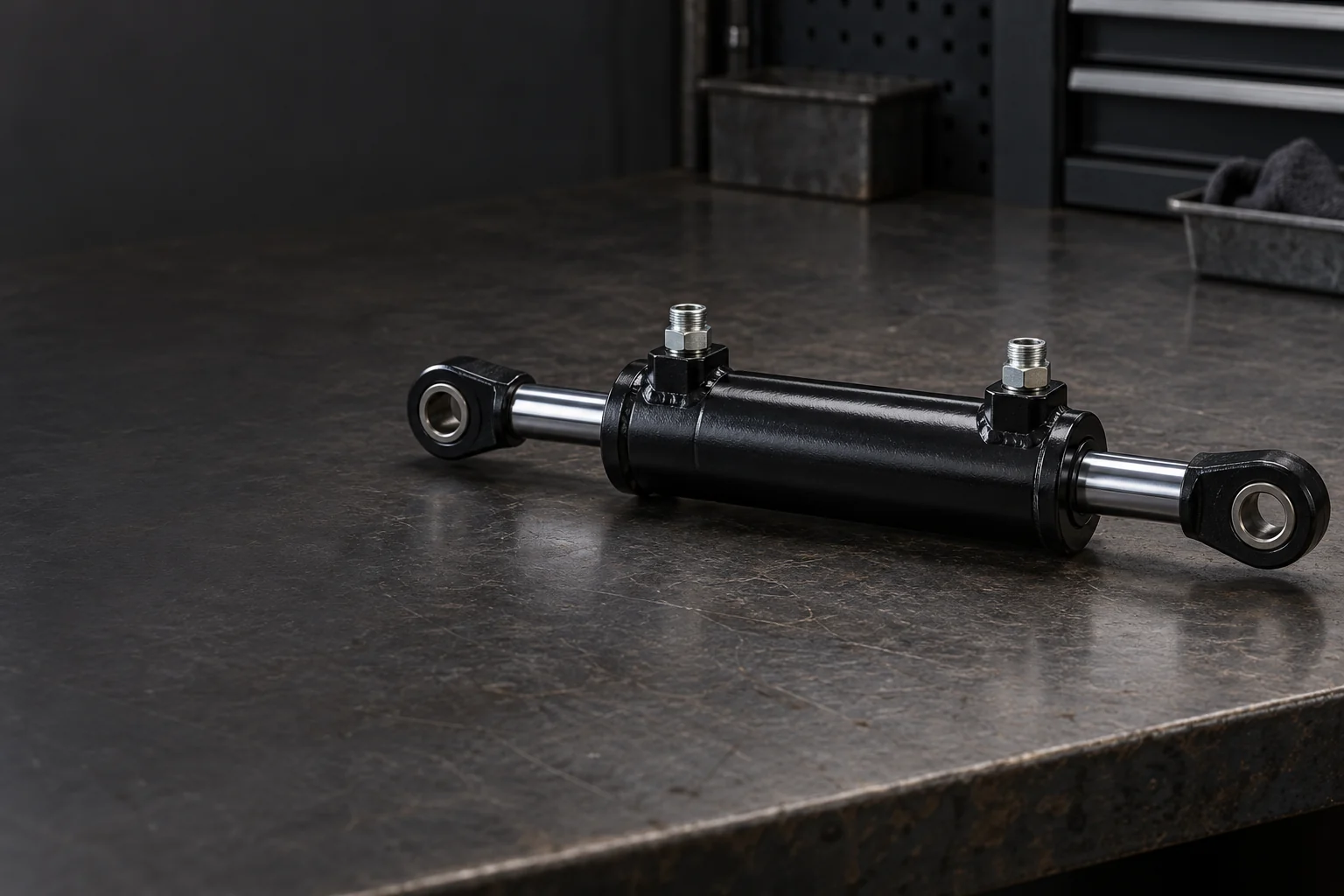
Identify a forklift steering-cylinder enquiry from the truck and steering assembly records, complete cylinder reference and current drawing. Separate a complete actuator from a seal kit, rod-end component or axle assembly. Appearance, a leak symptom or matching bore cannot establish the required repair or a compatible replacement. Ask for the exact supplied scope and documented application.
Start with the truck manufacturer, complete model and serial number, then obtain the relevant steering or axle assembly reference. Use the documented component identity to distinguish a hydraulic steering cylinder from a lift, tilt or attachment cylinder. This page does not assume that every truck steers through an identical rear-axle arrangement. Keep any known mounting position, cylinder manufacturer and complete reference with the enquiry. If the assembly identity is uncertain, ask for the appropriate parts documentation before treating a photograph or a steering complaint as a replacement specification.
More guidance for this step
Request a current drawing and complete interfaces
Retain the documented bore, rod, stroke, mounting arrangement, end connections and hydraulic port information when these are already available in a drawing or component record. Ask the supplier to identify which drawing and revision describe the actual offered item. These fields organise comparison; they are not an instruction to measure an operating cylinder, disconnect lines or determine a safe pressure. Similar external size does not establish the same application. State missing dimensions as unknown and request the responsible equipment-specific confirmation rather than inventing values from an image.
Define the requested supplied assembly
A cylinder offer may refer to a complete actuator or a narrower scope. Ask for a written list of included rod-end components, mounting items and other named accessories, together with exclusions. Keep any proposed bare cylinder, replacement rod, seal kit or steering axle assembly as a distinct enquiry. Do not assume that a cylinder photograph shows everything delivered or that a kit number covers every cylinder variation. Preserve the exact assembly and subcomponent references so that the supplier response describes the same requested item, quantity and condition.
More guidance for this step
Keep seal-kit identification separate from repair decisions
A seal-kit enquiry needs the full parent-cylinder identity and the supplied contents. A dimensional description or a seal photograph does not establish that a particular kit is appropriate, nor that resealing will resolve a reported steering problem. This page does not decide between a kit, a rod or a complete cylinder from leakage, play or rod appearance. Qualified assessment and the applicable equipment documentation govern repair decisions. Record the component request and any unresolved assessment separately; no dismantling, pressure test or return-to-service instruction is provided.
Read the supplier category within its actual boundary
Ningbo Zhongtian publishes a steering-cylinder product page inside its forklift and logistics-cylinder category. That is useful evidence for a cylinder-category enquiry and supports the existing internal company profile. The readable page does not publish a complete dimensioned replacement drawing or establish a particular truck fit, kit availability or stock quantity. Ask the supplier for a named proposal and the current document supporting it. Broad cooperation and quality statements on the company homepage do not prove original-brand authorization or application approval for the buyer's machine.
Retain a reviewable proposal before comparing price
Require the offered manufacturer, complete reference, drawing revision, supplied condition and itemised contents, then request the basis for the specified truck application. Record any differences in mounting, interfaces or supplied scope rather than accepting a similar-looking replacement. Confirm quantities, delivery destination, current availability and commercial terms in the actual quotation. The related steering-unit guide concerns a different component; a metering unit is not a cylinder. Retaining that distinction makes the enquiry easier to review and prevents a supplier from pricing a different part against an ambiguous steering request.
Supplier profiles for this requirement
These company routes are tied to readable manufacturer or company-controlled material reviewed on 3 October 2026. Use the stated scope to begin a shortlist. A profile does not establish current stock, certification, authorisation or a match for your truck.
The company-controlled forklift and logistics-cylinder category has a named steering-cylinder product page. This establishes a category discovery route, not a dimensioned replacement or seal-kit proposal. Ask for the complete offered reference, current drawing and documented application; neither the picture nor a directory profile establishes stock or fit.
For additional candidates, use the parts supplier directory. Ask each supplier to return the exact proposed item, condition, included documents, unresolved differences, quantity, destination and current delivery terms. Keep technical acceptance separate from commercial availability.
Purchasing questions
Can matching bore and stroke approve a steering cylinder?
No. Those are identification fields within a larger equipment and interface record. Obtain the full reference, current drawing and documented application of the proposed assembly.
Does a steering-cylinder listing prove a seal kit is available?
No. A kit is a separate scope with its own reference and contents. Ask the supplier to identify the exact parent cylinder and current kit offer.
Can this page decide whether a leaking cylinder should be resealed?
No. Leakage does not establish a repair choice on this purchasing page. Obtain qualified assessment using the relevant equipment documentation before selecting repair parts.
Is an orbitrol the same component as the steering cylinder?
No. Keep the hydraulic steering-control unit and the cylinder actuator as separate enquiries, with their own complete references and documented system relationship.
Primary-source notes · reviewed 3 October 2026
The references below support the stated category and identification examples. Manufacturer marketing statements are not treated as independent tests. No model-specific operating values, repair procedures or performance promises are inferred for another machine.
Named steering-cylinder page inside the company forklift/logistics category; no dimensioned fit approval: https://www.handelic.com/cn/productsd.php?pid=22&tid=9
Company identity, location and hydraulic-cylinder application scope: https://www.handelic.com/
Prepare a parts matching request
Send the equipment identity, complete component reference, existing drawings or label photos, requested scope, quantity and destination. Mark missing information unknown and ask suppliers to answer the same written requirement.