2.6-Ton Diesel Forklift — NYC-26
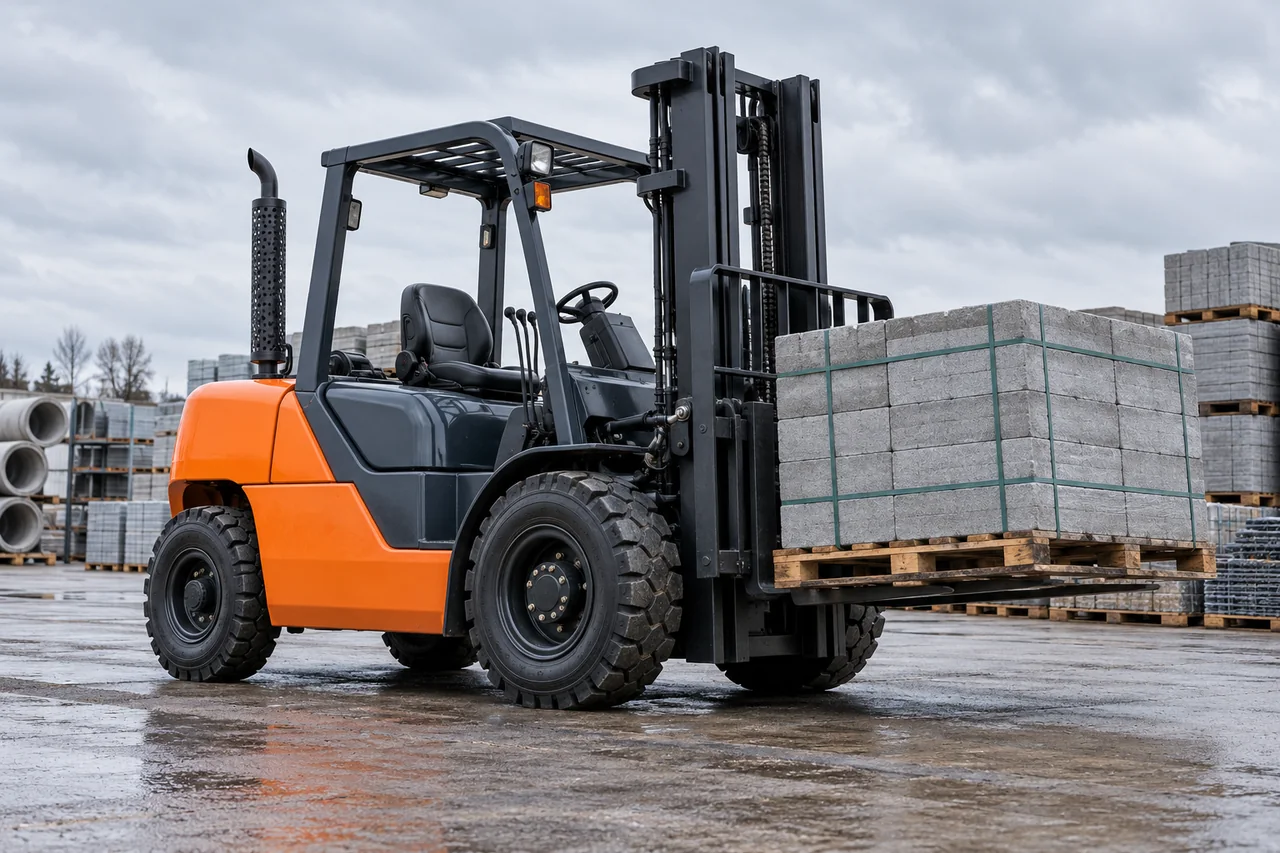
Category background illustration; not evidence of the exact model or working limits.
Legacy model reference for a written supplier inquiry. Exact manufacturer, configuration and supply terms require confirmation.
Illustration for category comparison; not verified photography of the reference model or linked supplier equipment.
At a glance
Legacy reference values below are not verified specifications of the offered truck or the linked supplier. Request a current model sheet and written confirmation.
Legacy specification references — verify before use
| Rated capacity | 2600 kg (2.6 t) |
| Load centre | 500 mm |
| Power | Diesel engine — 37–42 kW |
| Max lift height | 3000 mm (legacy reference) |
| Overall size (L×W×H) | 2900×1300×2200 mm |
| Wheelbase | 1735 mm |
| Service weight | 3100 kg |
| Min. turning radius | 2400 mm |
| Fork length | 1070 mm |
| Mast tilt (fwd/back) | 10°/8° |
| Tyres | Pneumatic (1000/70-16 / 600-9) |
| Min. ground clearance | 170 mm |
Prepare the application for comparison
Load and geometry
Provide actual loads, pallet dimensions and entry direction. Request a drawing for the exact proposed configuration.
Operating functions
Identify fuel or battery configuration, operator position, travel and lifting functions. Keep included equipment separate from options.
Work pattern
Describe route, trips per shift and available service or charging periods. General category descriptions do not establish output or site suitability.
Parts identity
Request complete model and assembly identifiers with parts documents. A shared reference code does not establish interchangeability.
Engine and options to confirm
Request the exact engine identity, mast, forks, tyres and attachments in the written proposal. The stored engine-power range and legacy dimensions do not establish that any engine brand, option or modification is currently offered.
Questions before sourcing
Is NYC-26 a confirmed HELI model?
No. The official H3 family supports supplier discovery. It does not identify NYC-26, confirm its stored dimensions or approve an actual 2.6-tonne load.
Are the stored numbers confirmed specifications?
No. They remain legacy reference values for verification. Request one current model sheet and reconcile it with the proposed configuration rather than mixing data from different trucks.
Are minimum order, availability and delivery confirmed?
No. Send quantity, destination and required timing, then request a dated written offer identifying the equipment, included documents and commercial terms.
Request a quote on the NYC-26
Tell us your load, lift height, engine preference and destination port — use those details to request comparable single-unit and container offers.
Get my quote2.6-Ton Diesel Forklift — NYC-26 supplier research
Evidence boundary: NYC-26 is an unverified legacy reference, not a confirmed HELI designation. A 2.5-tonne model does not meet a 2.6-tonne requirement merely because the values are close. Original dimensions and engine values are not assigned to HELI.
Keep the actual load requirement independent of the reference label
Describe the heaviest load, its dimensions and centre of gravity, required lifting height and any attachment. Ask the supplier to identify the exact model and provide its applicable capacity documents. Keep the nominal rating separate from capacity with a specific mast and attachment. Do not round a measured requirement down to a nearby catalogue step. The proposal should explicitly address the actual load and list unresolved inputs.
Describe the task and configuration
Record yard surfaces, gradients, access openings, turning areas and the working environment. Ask for configuration-specific assessment rather than treating a pneumatic tyre or diesel engine as evidence of rough-terrain approval. Request the engine designation, fuel specification, included equipment and destination documents as part of one written offer.
Request a comparable written response
Use one requirement brief for the shortlisted companies. Include quantity, destination, required timing and the technical inputs still awaiting measurement. Ask each proposal to distinguish included equipment, optional items and unresolved assumptions. Keep the dated model sheet, dimensional drawing, relevant documents and commercial terms together. If two documents disagree, request clarification against the exact proposed configuration before treating either number as final.
Connect equipment identification with parts sourcing
After the offered machine is identified, retain the complete designation, identification-plate details and component documentation with the procurement record. Replacement engine, hydraulic, wheel, charger or electrical requests should refer to the actual assembly and identifiers. The existing parts-matching path remains available for that information. Supplier discovery does not establish that a component is stocked, interchangeable or authorized for a particular machine.