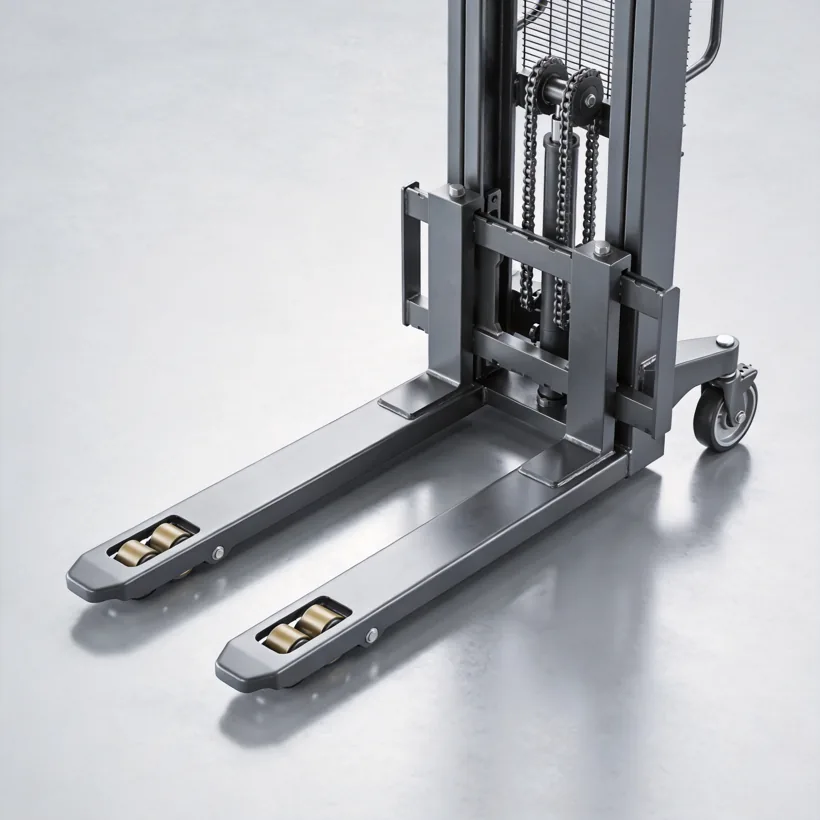
A mast enquiry needs both truck identity and mast identity. Stage count or truck capacity alone cannot specify a replacement rail, chain, roller or assembly. Use the installed mast record and original component references to define what is being requested.
The truck model can have more than one mast option. Toyota’s current data-plate guide describes mast type as a configured equipment field and identifies several stage arrangements on its product range. Record the mast designation, equipment serial number and applicable parts-document reference. Keep any attachment and carriage information with that record. Do not use a capacity band to infer the stage count, free-lift arrangement or dimensions of a replacement component.
More guidance for this step
Identify the requested level of supply
A complete mast, a rail component, a roller set and a chain are not equivalent offers. Write a separate line for each item and identify its position on the assembly drawing when available. Ask whether an offered assembly includes the carriage, chains, cylinders and associated components. State whether the request is for an existing configuration or a proposed change. A change in configuration needs the responsible equipment party’s review; this page cannot authorise a mast conversion or declare a lifting capacity.
Keep chain designation and terminations together
A supplier needs more than the general word chain. Preserve the original designation, manufacturer reference, relevant mast document, and specified length or link configuration when established in the parts record. Include the termination or anchorage drawing reference. Anchi’s controlled website distinguishes lifting and leaf-chain categories from other industrial chains. That supports a manufacturer discovery route, while the exact lifting-chain assembly still needs its own application confirmation. Do not treat chain pitch or a sample photograph as a complete interchangeability approval.
Use component drawings instead of generic dimensions
Roller diameter, width and bearing interface can narrow a request, but the installed location and applicable mast drawing remain part of identification. A similar roller can belong to a different rail or carriage assembly. Ask the supplier to identify the full reference and differences in the proposed component. Obtain existing records from the equipment or service organisation; do not dismantle a loaded assembly or conduct a lifting-system inspection merely to fill a web enquiry.
Separate purchasing from condition assessment
Jerky movement, visible damage or suspected chain wear needs a competent, equipment-specific service process. This page supplies no wear limit, replacement interval, tensioning method or adjustment procedure. Request the component identity and the service decision as purchasing inputs. Ask suppliers for traceable documentation and supplied contents, then retain the quotation with the original mast record. No factory-direct supply, certification package or universal aftermarket fit is implied by this category.
Supplier profiles for this requirement
These company routes are tied to readable manufacturer or company-controlled material reviewed on 2 October 2026. Use the stated scope to begin a shortlist. A profile does not establish current stock, certification, authorisation or a match for your truck.
The controlled website lists lifting-chain and leaf-chain categories as well as other industrial chains. Send the original chain designation, mast identity and termination details; a general chain category does not establish a forklift-specific replacement.
For additional candidates, use the parts supplier directory. Ask each supplier to return the exact proposed item, condition, included documents, unresolved differences, quantity, destination and current delivery terms. Keep technical acceptance separate from commercial availability.
Source mast rollers without inferring complete mast supply
Jiangsu Wanda publishes a dedicated mast-roller category with multiple family variants. Use this for an identified roller or bearing enquiry alongside the existing lifting-chain route. This does not establish complete mast, carriage, rail or cylinder supply. Hongyuan’s reviewed S-section item is described for sideshifter attachments and is therefore not added here as a verified mast-rail route.
Source bodies and same-day archived official documents reviewed on 4 October 2026. Directory inclusion does not approve fitment, capacity, stock or site work.
Purchasing questions
Does a three-stage mast identify its replacement parts?
No. Keep the mast designation, truck serial identity and applicable parts drawing. Stage count alone leaves the assembly configuration unresolved.
Can chain pitch alone establish interchangeability?
No. Preserve the full designation, configuration, length and termination details specified for the installed mast.
Do you publish a universal mast wear limit?
No. This is a component enquiry guide. Condition assessment and replacement decisions belong to the applicable equipment documentation and qualified service process.
What should a complete mast quotation include?
Ask the supplier to name all included rails, carriage, chains, cylinders and related items, and to identify the original configuration addressed by the offer.
Primary-source notes · reviewed 2 October 2026
The references below support the stated category and identification examples. Manufacturer marketing statements are not treated as independent tests. No model-specific operating values, repair procedures or performance promises are inferred for another machine.
Send the equipment identity, complete component reference, existing drawings or label photos, requested scope, quantity and destination. Mark missing information unknown and ask suppliers to answer the same written requirement.