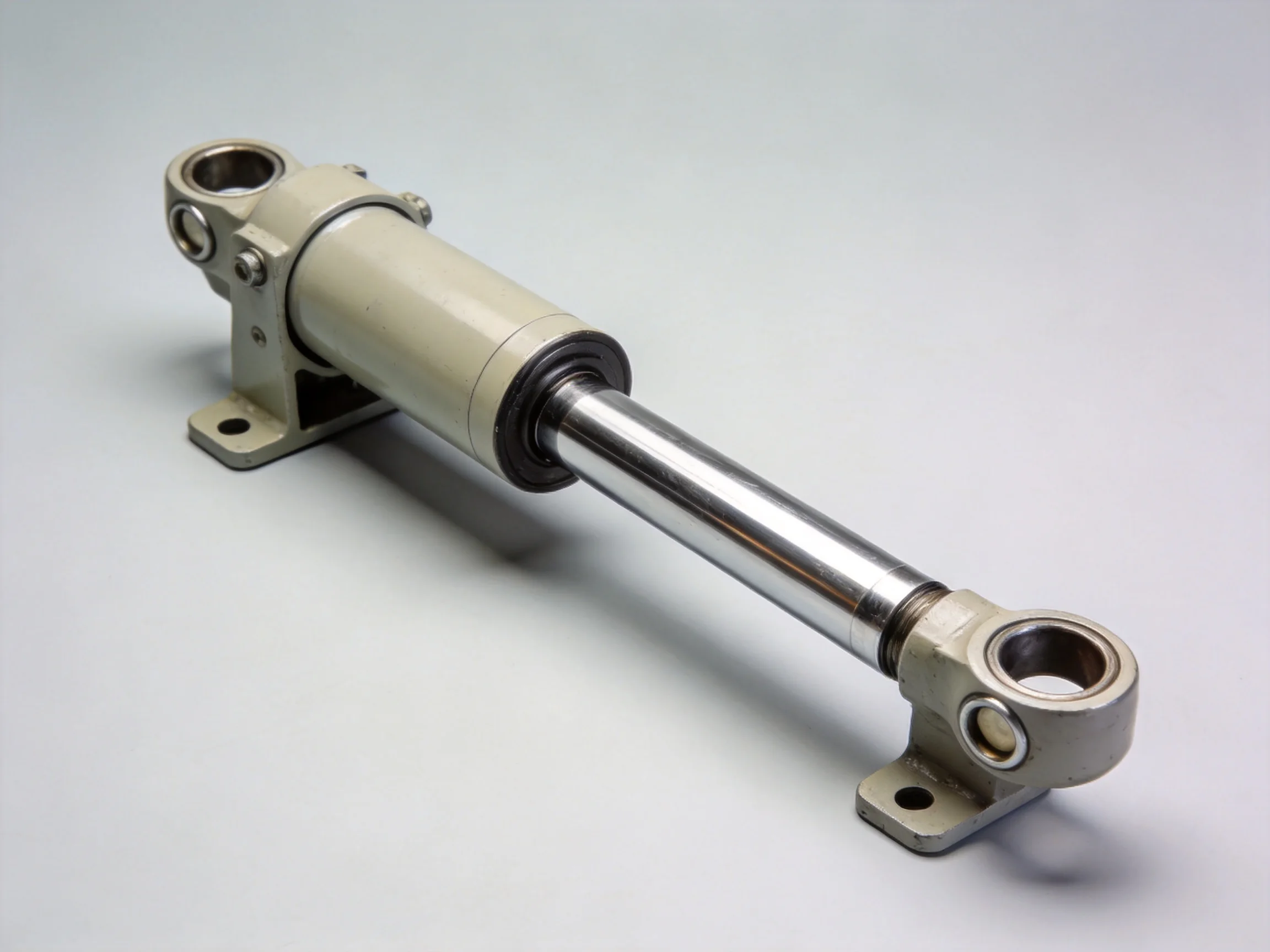
Identify the cylinder’s function and complete assembly reference before choosing a replacement or requesting a seal kit. Lift, tilt, steering and attachment cylinders have distinct applications; a matching bore or similar photograph does not establish fit.
Ningbo Zhongtian’s controlled catalogue separates lift, tilt, steering, attachment, AGV and reach cylinder categories. These distinctions are useful for discovery but do not prescribe the cylinder on a particular truck. State the original function and keep the mast or attachment identity when relevant. A chassis model alone can leave the installed hydraulic assembly ambiguous, especially where equipment options or attachments differ.
More guidance for this step
Use the complete assembly record
Retain the cylinder manufacturer reference, equipment part number and drawing revision, together with the truck or attachment serial number. Ask a supplier to identify the proposed assembly against that record. Where markings are missing, state which documents and safe photographs are available. Do not guess a code from a nearby cylinder or a catalogue image. Keep the unknown fields visible so the supplier knows what still requires identification.
Preserve geometry without prescribing measurements
Use existing drawings or service records for the documented bore, rod, stroke, mounting, envelope and connection arrangement. These are matching fields, not an instruction to dismantle or extend a cylinder to measure it. Ask for the proposed drawing and a written account of differences. A shared nominal size can coexist with a different stroke, mounting or internal assembly, so isolated dimensions do not resolve the requirement.
More guidance for this step
Distinguish the unit from its service parts
A complete cylinder, a rod-related assembly and a seal kit are different supply scopes. Request a contents list tied to the applicable parts record. A kit should be identified by the original cylinder variant and kit reference rather than a broad truck name. Do not assume that a leak or drift observation proves a seal-only repair is sufficient. The responsible service assessment must establish what procurement task is required.
Choose the appropriate manufacturer route
Zhongtian’s cylinder categories provide a broad forklift application route. Longyan’s website provides a forklift attachment cylinder route with a narrower stated scope. Neither website establishes independent hose or seal-kit inventory, current stock or a drawing match for your equipment. Send the full assembly identity and ask which documented product, service-parts record or enquiry department answers that specific request.
Compare scope before commercial terms
Ask whether the quote covers a complete assembly, included connections, supplied documents and any excluded ancillary parts. Preserve the proposed condition, warranty basis and any repair or exchange terms. Include quantity and destination once identity is clear. This page does not prescribe cylinder repair, seal replacement, pressure checks or load-handling procedures. Keep the supplier’s technical response with the original requirement so later commercial changes cannot obscure an unresolved assembly difference.
Supplier profiles for this requirement
These company routes are tied to readable manufacturer or company-controlled material reviewed on 2 October 2026. Use the stated scope to begin a shortlist. A profile does not establish current stock, certification, authorisation or a match for your truck.
Its manufacturer catalogue separates lift, tilt, steering, attachment, AGV and reach cylinders. This is a cylinder identification route; it does not establish independent seal-kit or hose inventory.
The company website presents forklift attachment cylinder applications. Use this profile for a documented cylinder assembly enquiry; attachment scope does not establish a universal cylinder, seal or hose replacement.
For additional candidates, use the parts supplier directory. Ask each supplier to return the exact proposed item, condition, included documents, unresolved differences, quantity, destination and current delivery terms. Keep technical acceptance separate from commercial availability.
Purchasing questions
Does the truck model identify every cylinder?
Not necessarily. Include mast or attachment identity and the complete cylinder reference.
Is equal bore size enough?
No. Assembly variant, stroke, mounting, connections and other documented interfaces remain relevant.
Does leakage prove I only need a kit?
No. The replacement scope must come from a model-specific assessment.
Can a cylinder supplier provide every seal?
This page makes no such claim. Ask for the applicable service-parts record and current offer.
Primary-source notes · reviewed 2 October 2026
The references below support the stated category and identification examples. Manufacturer marketing statements are not treated as independent tests. No model-specific operating values, repair procedures or performance promises are inferred for another machine.
Send the equipment identity, complete component reference, existing drawings or label photos, requested scope, quantity and destination. Mark missing information unknown and ask suppliers to answer the same written requirement.