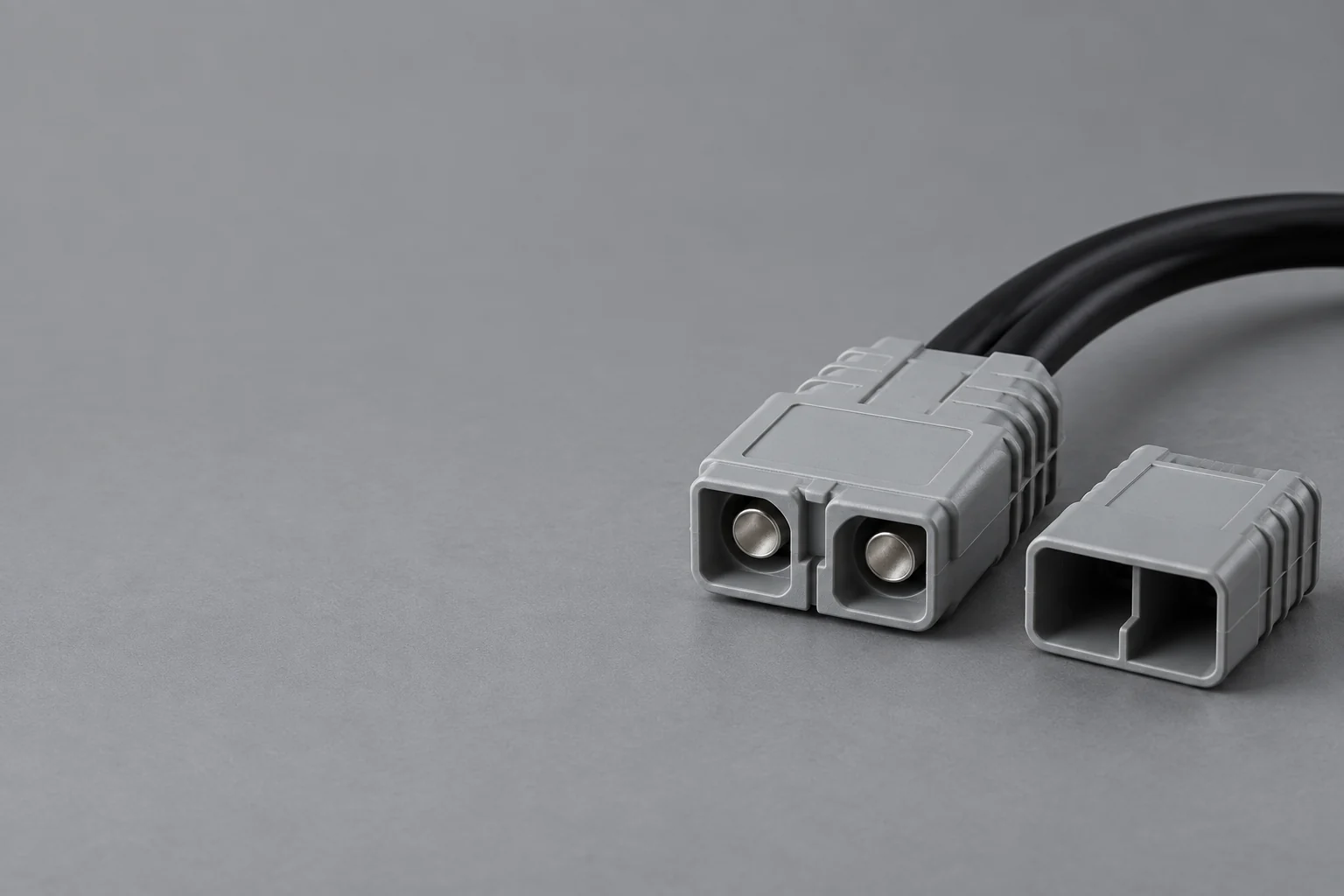
Define the charger-side DC connection as a complete lead or individual component enquiry. Retain both charger and battery identities, the full connector references and any documented auxiliary interfaces; this page does not cover mains plug conversion.
State whether the requirement is a complete charger-to-battery lead, a housing, contacts or another documented charging-interface component. Identify the charger and battery it would connect. This guide’s enquiry scope is the battery-side charging connection, not a mains outlet or plug conversion. A complete lead can differ materially from a component-only offer. Ask suppliers to list included pieces and any retained original part rather than inferring supplied contents from a similar-looking catalogue image.
More guidance for this step
Capture both ends of the enquiry
Retain the existing charger manufacturer, complete model, battery identity and connection-assembly reference. Use accessible markings and existing drawings; do not disconnect or dismantle equipment to collect information for this page. Ask for the proposed lead drawing and the evidence supporting its intended mating arrangement. A generic connector family name does not identify lead length, routing, assembly scope or the actual equipment interface. Record missing fields as unknown so suppliers can explain what further identification they need.
Retain housing and contact evidence together
A charger-side housing is not automatically an interchangeable lead merely because it resembles the battery-side connector. Retain the exact housing, contact and assembly references and ask for their documented pairing. Anderson’s named SB175 housing example distinguishes mechanical keying from a complete connection decision. It should not be turned into a colour-based voltage rule or a universal compatibility claim. The generic illustration shows a lead-end form only; it identifies no manufacturer series, contact rating or approved assembly.
More guidance for this step
Ask about documented auxiliary interfaces
Some proposed charging arrangements involve more than the main power connection. Ask the charger and battery suppliers which auxiliary sensing or communication components the actual configuration requires, and retain their references and documents. Do not infer signal compatibility from the number of small contacts or a protocol label. EnerSys’ named NexSys+ monitoring arrangement is an example of configuration-specific supporting equipment, not a requirement for every charger. This page provides no pin assignments, wiring, adaptations or instructions to modify a connection.
Decha’s company catalogue presents named charging plugs and forklift battery-cable or power-connector assemblies. Use the relevant electrical entry as a starting point and ask for the exact current proposal. An entry described with a brand or current headline does not prove original origin, rating under your conditions, approved mating or available stock. Ask whether the offer is a complete charging lead, a connector set or another assembly. Keep the supplied scope, condition, supporting documents and unresolved differences in the comparison.
Compare complete leads and remaining responsibilities
Send candidates the same charger, battery and installed connection identities, requested scope, quantity and destination. Ask for a dimensioned assembly proposal, included components, exclusions and current commercial terms. Lead routing, retention and the intended equipment arrangement should be addressed through applicable documents and competent review, not estimated from an illustration. An observed charging interruption or warm connection does not independently establish a failed contact. This guide does not prescribe replacement in pairs, cleaning methods or installation; it organises evidence for a purchasing enquiry.
Supplier profiles for this requirement
These company routes are tied to readable manufacturer or company-controlled material reviewed on 3 October 2026. Use the stated scope to begin a shortlist. A profile does not establish current stock, certification, authorisation or a match for your truck.
The readable catalogue includes named forklift power connectors, charging plugs and battery-cable assemblies. Use the precise entry as an enquiry lead; its brand wording does not establish genuine origin, authorisation, stock or approved interchangeability.
For additional candidates, use the parts supplier directory. Ask each supplier to return the exact proposed item, condition, included documents, unresolved differences, quantity, destination and current delivery terms. Keep technical acceptance separate from commercial availability.
Purchasing questions
Does this page cover an AC mains plug conversion?
No. Its enquiry scope is the charger-to-battery DC connection; site electrical changes need their own qualified review.
Is a connector set the same as a complete lead?
No. Confirm the exact included housing, contacts, cable and assembly documents in the supplier response.
Does matching colour establish a charging connection?
No. Retain the documented family, components, pairing and equipment interfaces for the actual proposal.
Does a warm charging connector prove worn contacts?
No. Record the observation as context and keep diagnosis separate from the component enquiry; this page gives no repair procedure.
Primary-source notes · reviewed 3 October 2026
The references below support the stated category and identification examples. Manufacturer marketing statements are not treated as independent tests. No model-specific operating values, repair procedures or performance promises are inferred for another machine.
Anderson named housing and keying example: https://www.andersonpower.com/product/sb175-housing-black-keyless/
Decha charging-plug and battery-cable catalogue leads: https://www.dechaparts.com/?s=connector&post_type=product
Prepare a parts matching request
Send the equipment identity, complete component reference, existing drawings or label photos, requested scope, quantity and destination. Mark missing information unknown and ask suppliers to answer the same written requirement.