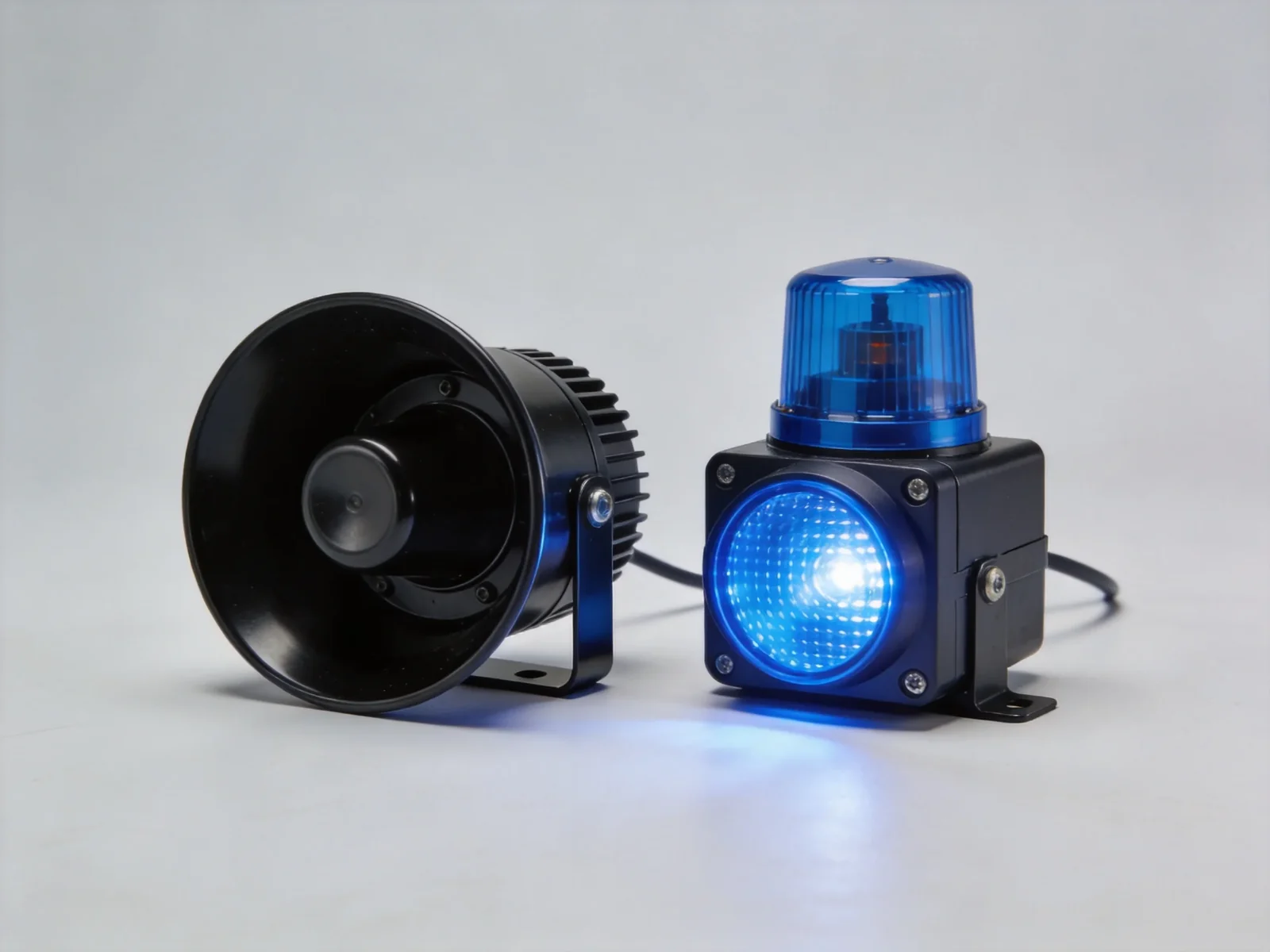
Separate an audible reverse alarm, beacon and projected warning light before requesting a quote. Match each proposed device using its exact code, documented electrical and mounting requirements, truck application and site assessment. A warning accessory does not by itself establish compliance or replace pedestrian separation.
An audible alarm, flashing beacon and projected floor light serve different warning purposes and should remain separate enquiry lines. Record what the installed device is intended to do using the truck documentation and site requirement. A work lamp illuminates an area; it should not automatically be described as a projected warning device. Preserve the exact installed reference and identify the required replacement scope. Avoid bundling several different devices under an unspecified forklift safety-light quotation.
More guidance for this step
Keep electrical information model-specific
Request the exact offered device datasheet, documented supply range, current or power information, connection designation and relevant interface requirements. Do not use a category-wide voltage range as an ordering specification. Autopax lists several backup sirens and buzzers with different published values, illustrating why the product reference matters. Those catalogue claims are not independent measurements. They cannot establish suitability for another device or every forklift electrical system. Record unresolved electrical differences for the technical reviewer.
Distinguish a projected spot from a beacon
HELLA describes its Module 50 LED Spot as a lamp that projects a circular warning spot onto the floor or work area, including forklift applications. That explains the category distinction from a flashing beacon or general lamp. It does not demonstrate the suitability of an unrelated product or a particular site layout. Request the proposed lamp’s own projection, colour, mounting and connection documentation. Do not infer accident prevention or measured visibility from a category illustration.
More guidance for this step
Retain mounting and environmental evidence
Clarify whether the proposal includes brackets, fasteners, cable, connector or a complete assembly. Ask for the offered device’s dimensional drawing and documented environmental characteristics. A picture alone does not establish clearance, orientation or compatibility with an existing mounting arrangement. Compare included scope across quotations and identify any additional parts needed for review. Installation suitability and commissioning belong with the responsible technical team; this page does not prescribe wiring, positioning distances or adjustment procedures.
Separate accessory purchasing from site approval
A warning accessory does not replace pedestrian segregation, operator training or the site’s assessment of vehicle movements. Do not infer a universal legal requirement from a supplier statement or a lamp certification. The applicable machine and site requirements need their own review. Request relevant product documents without presenting them as proof that the whole operation is compliant. Audible-warning suitability also requires consideration of the actual environment; an advertised sound figure alone cannot settle that decision.
More guidance for this step
Compare exact offers and preserve fault context
Autopax provides a documented backup-siren enquiry route, including A060032 and A060003 catalogue references. These examples support discovery, not stock or forklift compatibility claims. Ask for the exact proposed code, condition, included accessories, documents, warranty and current delivery terms. A silent reverse alarm may have several causes; a symptom does not establish that the alarm unit requires replacement. Keep the linked symptom guide as context and leave diagnosis and technical approval separate from the buying shortlist.
Supplier profiles for this requirement
These company routes are tied to readable manufacturer or company-controlled material reviewed on 3 October 2026. Use the stated scope to begin a shortlist. A profile does not establish current stock, certification, authorisation or a match for your truck.
Its company website lists backup sirens and buzzers, including A060032 and A060003, and separate warning-light categories. This supports an audible-warning accessory enquiry. A published category or voltage claim does not establish forklift fit, site suitability, compliance or current availability.
For additional candidates, use the parts supplier directory. Ask each supplier to return the exact proposed item, condition, included documents, unresolved differences, quantity, destination and current delivery terms. Keep technical acceptance separate from commercial availability.
An accessory route for audible warnings and lighting
Autopax’s backup-siren category contains separate siren and buzzer references; its work-lamp category covers illumination. Use the exact published reference to request the device documents and identify the intended function. A buzzer, beacon, projected warning light and work lamp are different enquiries. Do not infer that a light visible in a catalogue has the required function, mounting or interface for the truck. Supplier-published sound, voltage and approval headings are not adopted here as tested performance or acceptance of a site warning arrangement.
Original company-controlled bodies reviewed on 4 October 2026. Inclusion confirms a research route; it does not confirm inventory, authorization or fitment.
Separate vehicle warning lighting from sounders and projected spots
The reviewed warning-light catalogue includes beacon and lighthead families, while the work-light catalogue is a separate illumination route. A beacon attracts attention and a work lamp illuminates an area; neither should automatically be described as a projected floor-warning spot, reverse alarm or complete safety system. Ask which exact item is proposed, who manufactures it and what documents describe its intended application. The reviewed bodies do not establish a specific forklift serial-number match or site approval. NOVA provides a general vehicle warning-light route. Its manufacturer and sourcing activities are distinct; ask for the producer of the offered item. This route does not establish a reverse sounder, projected blue floor spot or approval for an installed safety function.
Company-controlled bodies reviewed on 4 October 2026. Supplier discovery, item origin, current supply and truck-specific acceptance remain separate decisions.
No. A projected spot and a flashing beacon have different visual functions and documentation requirements.
Do all reverse alarms share a voltage range?
No. Use the exact device datasheet rather than a generic category range.
Does adding a warning lamp establish compliance?
No. Product documentation, machine application and site requirements require separate review.
What should an alarm quotation include?
The exact code, electrical and mounting documents, included accessories, condition, application evidence, warranty and delivery terms.
Primary-source notes · reviewed 3 October 2026
The references below support the stated category and identification examples. Manufacturer marketing statements are not treated as independent tests. No model-specific operating values, repair procedures or performance promises are inferred for another machine.
Manufacturer projected-spot category example; no independent safety-performance claim: https://www.hella.com/australiansolutions/en/Products/Module-50-LED-spot-7567/
Company-controlled backup siren and buzzer catalogue: https://www.autopax.com/product/1/15
Prepare a parts matching request
Send the equipment identity, complete component reference, existing drawings or label photos, requested scope, quantity and destination. Mark missing information unknown and ask suppliers to answer the same written requirement.