Official website reviewed · 4 October 2026Company description
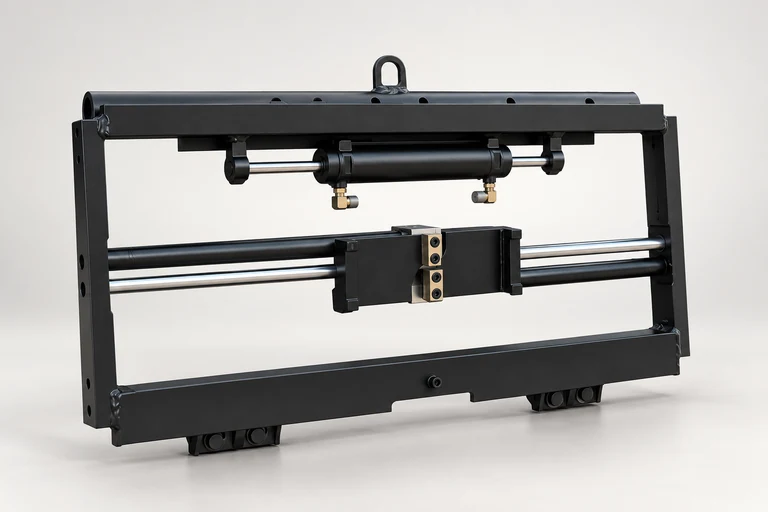
The current Liandong portal on helichina.com identifies 安庆联动属具股份有限公司 in its copyright record, with a contact address at No. 16 Fangxing Road, Anqing Economic Development Zone, Anhui. Its introduction describes development, manufacture, sales and service of construction-machinery attachments and parts. The positioning category names integral sideshifters, a hook-on sideshifter and separate fork-positioner families, including combined sideshift-and-positioning entries. Anqing Liandong Attachments is an English rendering used here for the current Chinese identity; it is not a separately verified registered English name. The existing page URL is retained, while the former English directory label is replaced by the current portal identity.
The published location and scope make this record relevant to buyers researching local forklift-attachment manufacturer. The page is a discovery record. Availability, production status, stock, territorial rights, response time and commercial terms can change, so the legal entity issuing the quotation should confirm each point in writing.
This is a parts or component route. It is included in the city parts directory and should not be treated as a complete-forklift supplier unless a current written offer establishes that separate role.
Website-documented scope
- Integral sideshifter category entries
- Hook-on sideshifter category entry
- Fork-positioner and combined positioning entries
- Other attachment families subject to defined scope
These categories classify the reviewed source. They do not prove current inventory, manufacturing capacity, brand authorization, certifications, export coverage, service staffing, customer claims or fitness for a particular site. A buyer should request current product and company evidence that matches the proposed transaction.
Where this supplier may fit in a shortlist
Begin with the work rather than a generic price request. Record rated load, load centre, lift height, mast constraint, aisle and turning space, floor and ramp condition, travel distance, shifts, ambient conditions, energy source, attachment functions, quantity, destination and delivery date. State whether the need is for a new truck, used truck, rental, automation project, service visit or replacement component. This prevents suppliers from quoting materially different configurations under similar product names.
For service, include the truck make, model, serial number, hours, fault codes, symptoms, recent work and current safety condition. Ask the supplier to state inspection scope, labour and travel basis, target response time, parts-approval method, warranty boundary and responsibility for transport or site access.
For a manufacturer or official-network record, confirm which legal entity will quote, invoice, deliver and perform warranty work. A network location is useful evidence of a contact route, but the buyer still needs a current statement of territory, product scope, stock source and the service team responsible for the job.
How to compare the response
Send the same written requirement to every shortlisted company. Require the exact model or component, configuration, condition, rated-capacity basis, battery and charger or engine data, tyres, mast, attachments, safety options, included accessories, software where relevant, documentation, delivery scope, lead time, warranty and after-sales route. Require assumptions and exclusions to be listed rather than left implicit.
Compare technical compliance before headline price. A lower offer may use a different mast, battery, charger, attachment, tyre, condition standard, commissioning package, software interface, warranty or delivery term. Keep those differences visible in a comparison table and return incomplete answers for correction before selecting a supplier.
Reconcile the website identity with the quotation, company registration, invoice and bank beneficiary. A brand, manufacturer, branch, dealer and service point may play different roles. Ask who owns the goods, who accepts payment, who carries product liability and who will honour the warranty.
Equipment and parts evidence
For a truck purchase, request the model datasheet, dimensions, turning and aisle data, residual-capacity evidence for the proposed mast and attachment, energy-system specification, tyres, environmental limits, maintenance schedule and applicable compliance documents. For used equipment, add serial identity, year, hours, battery or engine condition, repair history, inspection evidence and exact warranty terms.
For a parts request, preserve truck and component identity. Record the truck brand, model, serial or chassis number, voltage and configuration. Photograph the truck nameplate, component label, every complete part number, connectors, cable orientation, ports, mounting points and dimensions. Ask the supplier to state the catalogue, drawing, sample or cross-reference used for its match. Similar appearance or a broad model family is not reliable compatibility evidence.
For batteries, controllers, motors and charging equipment, also record nominal and permitted voltage, continuous and peak current, connector and polarity, communication protocol, firmware or parameter requirements, cooling, enclosure, mounting, charger or motor data and safety interlocks. Do not energise a substitute until a competent technician has confirmed the electrical and functional match.
Verification and evidence boundary
ForkliftIQ included this record because a reachable company-controlled website or official manufacturer network identified a named company, branch or service point, a usable Anqing address and explicit forklift, material-handling, component, parts or service scope. ForkliftIQ has not audited the business, factory, staff, stock, authorization, certificates, service vehicles, customer references or financial position.
Before contracting, verify the legal entity and current operating identity through appropriate official sources. Request current model-specific documents whenever safety, import, export, site rules or regulatory duties require them. Preserve the requirement, supplier response, drawings, datasheets, certificates, commercial terms, identity checks and unresolved questions as one purchasing record.
Website shown on this recordhttps://www.helichina.com/ldsj/Displayed for source identification only; it is not a clickable outbound link.
Questions to resolve before moving forward
- What legal entity will issue the quotation, contract and invoice?
- What exact model, condition and configuration answer the stated application?
- Which current datasheets, drawings, tests and certificates support the proposal?
- What equipment, accessories, commissioning and documents are included?
- What are the price basis, lead time, delivery terms, warranty and support route?
- Which assumptions, exclusions and site responsibilities remain with the buyer?
Frequently asked questions
Does this profile mean ForkliftIQ approved the supplier?
No. It records a reachable controlled source, a published local connection and visible relevant scope. Supplier identity, capability and the current offer still require buyer verification.
Does the listed scope prove current availability?
No. Website categories support discovery. Stock, configuration, authorization, certification, lead time and delivery must be confirmed in a current written quotation.
Why is the supplier website plain text?
The address identifies the research source while the ForkliftIQ profile remains the directory destination. It is intentionally displayed without a clickable outbound link.
Featured placement, verified business fields, product catalogues and enquiry-routing services may later be offered as paid options. This research record remains evidence-bounded and does not receive a commercial ranking advantage.